Your aquarium is a tiny ocean. Without a good filter, waste builds up fast, stressing out your fish like kids in a messy room. Aquarium filter types handle this magic by cleaning water in three main ways: mechanical (grabbing junk), biological (good bacteria eating toxins), and chemical (polishing it nicely). Why care? A top-notch filter prevents sick fish, cloudy water, and heartbreaking losses—I’ve seen tanks bounce back from near-death with the right pick.
Fish tank filters aren’t just gadgets; they’re lifelines. Think of biological filtration as nature’s cleanup crew, turning harmful ammonia from fish poop into safe nitrates. Skip this, and your tank crashes. Mechanical filtration traps debris like a vacuum, while chemical bits like carbon zap odors. Get these essentials right, and your fish swim stress-free, colors popping brighter. Ready to match the best aquarium filter to your setup? Your happy fish will thank you with joyful darts around the tank.
Core Types of Aquarium Filters Explained
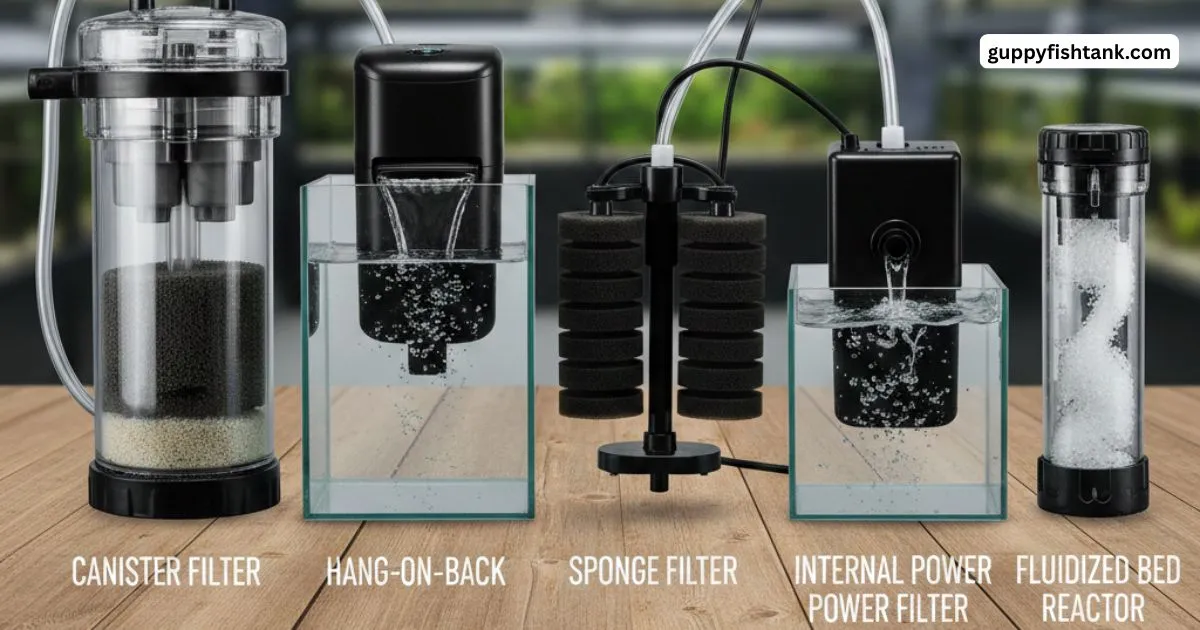
Okay, let’s meet the stars: the main aquarium filter types. First up, canister filters—the powerhouses for big tanks over 200 liters. They sit under your tank, sucking water through layers of media for top-tier cleaning. Pros? Super quiet and strong biological filtration. Cons? Pricey (think Rs. 10,000+) and a bit fiddly to clean. Perfect for cichlid crowds or goldfish gulpers.
Hang-on-back (HOB) filters are the chill beginner’s best friend. They hook right on the tank rim, great for 50-200 liter setups. Easy to install, they mix all three filtration types and cost under Rs. 5,000. Love how they bubble away without fuss—ideal for tetras or guppies. Sponge filters? Budget kings for nano tanks or baby fish. Air-powered, they shine in biological filtration for shrimp breeding tanks, gentle on fry. Types of aquarium filters like these keep things simple: pick by tank size and fish needs.
Don’t sleep on undergravel or internal filters either. Undergravel hides under sand, pushing water up for solid biological work—old-school but effective for low-maintenance folks. Internal filters are tiny powerhouses inside small tanks, blending mechanical and biological filtration, cheap and quick.
| Canister | Large tanks (200L+) | Strong, quiet, multi-stage | Expensive, messy clean | 10,000-25,000 |
| HOB | Medium (50-200L) | Easy setup, balanced | Visible, needs tweaks | 3,000-8,000 |
| Sponge | Nano/breeding | Gentle, cheap bio | Weak for big loads | 1,000-4,000 |
| Undergravel | Planted/low-flow | Hidden, simple | Hard to clean gravel | 2,000-5,000 |
Mechanical, Biological, and Chemical Filtration Breakdown
Filters aren’t one-trick ponies—they team up in three stages. Mechanical filtration is your first line: sponges and floss snag poop, uneaten food, and plant bits before they rot. It’s like a screen door keeping bugs out—change it weekly to avoid clogs.
Biological filtration steals the show. Good bacteria grow on sponge or ceramic media, munching ammonia (deadly!) into nitrite, then nitrate (safer in small doses). This is your tank’s beating heart—canister filters and sponge filters excel here, kicking in after 4-6 weeks of cycling. Rush it, and fish gasp at the top—heartbreaking stuff.
Chemical filtration polishes with carbon or zeolite, sucking out meds, tannins, or smells. Use sparingly, like 1-2 months, or it strips good stuff too. Mix all three in HOB filters for balance. Different types of aquarium filters shine differently: sponge for bio heroes, canister for all-rounders. Nail this trio, and your water stays crystal—fish thrive, plants glow.
Which Filter Is Best for Your Tank Size?
Tank too small for overkill? Nano setups under 20 liters love sponge filters—low flow, big bio punch without overwhelming shrimp or betta mazes. Step up to 50 liters? HOB filters rule, turning over water 4-5 times hourly for happy schools.
Medium 50-200 liter tanks? Canister filters or strong HOBs handle bioload from 20+ fish. Large 200+ liters scream for canisters or sumps—think heavy feeders like plecos. Best aquarium filter? Match gallons to GPH (gallons per hour): aim for 4-10x turnover. Overdo flow, fish hide scared; underdo, toxins build. Your tank size dictates—pick wrong, regret hits fast.
What Flow Rate Do Shrimp or Fry-Sensitive Fish Need?
Shrimp moms-to-be or tiny fry trembling? High flow spells doom—they get sucked in or battered. Low-flow sponge filters (under 100 GPH) are lifesavers, powered by gentle air pumps. Perfect for breeding tanks where biological filtration trumps speed.
Bettas and slow swimmers dig 3-5x turnover—add a baffle to tame HOB jets. Goldfish? Crank it to 8-10x; they foul water quickly. Test flow with a leaf: slow drift means cozy, whirlpool means adjust. Gentle flow keeps babies safe, parents proud—pure joy watching them thrive.
Smart Filters and UV Sterilizers: 2026 Tech Upgrades
2026 brings cool upgrades competitors skip. Smart filters with apps track flow, ping your phone for clogs—like a babysitter for your tank. Pair with UV sterilizers: zaps algae and bacteria mid-water, no chemicals. Add to any canister or HOB for disease-free bliss in Pakistan’s warm climates.
Nano smart HOBs (Rs. 7,000) glow with LED alerts. UV shines for ich outbreaks—fish recover overnight. Fish tank filters evolve: hybrid canister-UV setups crush green water. Future-proof now; your tank stays party-ready year-round.
Maintenance Schedules by Filter Type
Filters beg love—ignore, and they quit. Sponge? Rinse biweekly in tank water (save bacteria!). HOB: media swap monthly, impeller check quarterly. Canister deep clean every 1-2 months: disassemble, brush, reassemble—30 minutes tops.
Weekly: skim mechanical pads. Monthly: refresh chemical media. Hybrid setups? Rotate duties. Islamabad hobbyists, grab media from Daraz or Hall Road—Rs. 500 packs last ages. Stick to the schedule: clear water, zero crashes. Your fish zoom gratefully.
Read More: Why Is My Aquarium Water Cloudy? Fix Cloudy Aquarium Water in 24 Hours
Common Filter Mistakes Beginners Make
Ever bought a too-small filter, watched algae explode? Classic blunder—size for double your bioload. Overcleaning kills bacteria; nudge, don’t scrub. Wrong type? Nano with canister—overkill waste.
Noisy pumps? Clean impeller. Bubbles gone? Check the air stone. FAQ fixes: “Filter clogged?”—pre-filter sponge. “Fish gasping?”—cycle check. Dodge these, level up fast—pride swells seeing your thriving community.
Budget vs. Premium Filter Showdown
Pinched wallet? Sponge (Rs. 1,500) outperforms pricier internals for bio. Mid-range HOB (Rs. 4,000) edges budget canisters. Premium canister (Rs. 15,000+)? Unmatched power for 300L beasts.
| Sponge: Bio champ, low flow | Canister: All-stage beast |
| Basic HOB: Easy start | Smart UV HOB: Tech perks |
| Undergravel: Set-forget | Sump: Pro-level quiet |
Local wins: Daraz HOBs ship free. Premium pays long-term—less hassle, happier fish.
Conclusion: Build Your Custom Filtration System
Mix sponge for bio, HOB for mech—custom heaven. Start simple, upgrade smart. Your tank, your rules: crystal waters await. Grab tools, tweak, watch magic. Happy filtering—may your fish live long, love deep!