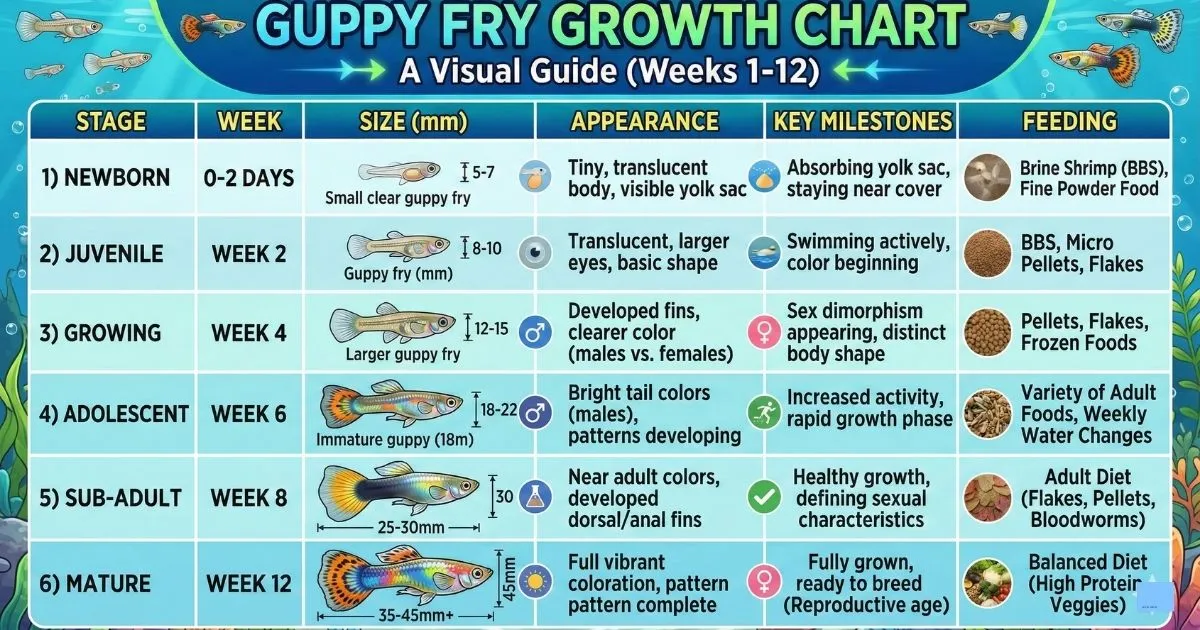
If you’re raising baby guppies, a clear guppy fry growth chart can make everything easier. From tiny newborn fry to colorful young guppies, each stage of growth matters. In this guide, I’ll help you understand how fast guppy fry grow, what size to expect week by week, and how proper feeding and care support healthy development. Whether you’re a beginner or experienced hobbyist, this simple breakdown will guide you with confidence.
The Lifecycle of Guppy Fry
Watching your guppy fry grow is one of the most rewarding parts of fishkeeping. It’s like a tiny, underwater soap opera unfolding right before your eyes! From nearly invisible specks to vibrant, swimming jewels, their journey is fast and fascinating. Understanding the guppy fry growth stages helps you provide the best possible guppy fry care at every step. Let’s take a quick tour of what to expect as your new friends grow up.
Overview of Guppy Fry Growth Stages
A guppy’s life is a quick sprint. They go from newborn to parent in just a few months! This rapid development is broken down into four key phases: newborn, juvenile, sub-adult, and adult. Each stage has unique needs, especially when it comes to guppy fry feeding and tank conditions. Knowing what to look for will make it easy to follow along with a guppy fry growth chart and ensure your fry are thriving.
Key Milestones from Birth to Adulthood
The journey begins with tiny, vulnerable fry that need protection and specialized food. A big focus is on how to care for guppy fry in the first month, as this is when they are most fragile. Within weeks, you’ll see them enter the juvenile stage, where their personalities and colors start to emerge. Soon after, they become sub-adults, practicing for parenthood. Before you know it, at around six months, they are fully grown adults, ready to start families of their own. It’s a whirlwind of growth, and we’ll guide you through every milestone.
Preparing for Guppy Fry
Getting ready for baby fish is almost as exciting as the main event! Just like you’d baby-proof a house for a toddler, you need to prepare a safe haven for your swimming bundles of joy. Proper guppy fry care starts long before the fry actually arrives.
Setting Up the Perfect Tank for Fry
Think of the fry tank as a nursery. It doesn’t need to be huge; a 5 to 10-gallon tank is often perfect. This smaller space makes it easier for the little ones to find food without getting lost. The key here is guppy fry water quality. You want the water to be clean and stable, just like a warm bath, to keep their tiny immune systems strong.
Essential Equipment for Guppy Fry Tanks
You don’t need fancy gadgets, but a few basics are non-negotiable. First, you’ll need a sponge filter. Regular filters are too strong and can accidentally suck up your tiny friends, yikes! A sponge filter is gentle and keeps the water safe. You’ll also need a heater to keep the water cozy and a light to help them grow. Finding the best lighting setup for guppy fry growth is simple: just ensure they have a day and night cycle.
How to Create a Safe Environment for Newborn Fry
The biggest danger to fry? Their own parents! Hungry adults will often mistake fries for a snack. To stop this, add plenty of hiding spots. Live plants like Java Moss or Guppy Grass are perfect because they provide a natural jungle gym for the babies to hide in. This is the number one trick for how to prevent fry from being eaten by adults. With plenty of cover, your fry can relax and focus on growing big and strong.
Guppy Fry Growth Stages
Get your guppy fry growth chart ready! These little fish grow faster than weeds in a summer garden. Understanding the different guppy fry growth stages helps you know exactly what to expect as your swimming jewels mature.
Stage 1: Newborn Fry (0-4 Weeks)
This is the most critical time for guppy fry care. Newborns are tiny, about a quarter of an inch long, and spend most of their time hiding from hungry adults. Knowing how to care for guppy fry in the first month is all about safety and food. They need frequent, small meals to fuel their rapid growth. Keep the water clean and the lights on for roughly 12 hours a day to help their spines develop strong and straight.
Stage 2: Juvenile Fry (4-8 Weeks)
By month two, your fry are getting braver! Guppy fry feeding is still super important here, but you can start introducing a bit more variety to their diet. The coolest part? You might start to tell the boys from the girls. Females often develop a dark “gravid spot” on their belly, while males stay slimmer and start showing hints of color.
Stage 3: Sub-Adult Fry (8-26 Weeks)
Now the real show begins! This is the “teenager” phase where colors explode, and tails get fancy. They are sexually mature now, so if you don’t want a population boom, it’s time to separate the boys and girls. Keep up the high-quality food to ensure those vibrant colors pop.
Stage 4: Adult Guppies (6+ Months)
Congratulations, they’re all grown up! At six months, your guppies are fully adult-sized. While their growth slows down, their need for a clean, happy home doesn’t. Continue their care routine to enjoy their beauty for years to come.
How to Maximize Guppy Fry Growth
So, you want your little guppies to grow big and strong, fast? It’s not just about luck; it’s about giving them the VIP treatment! Think of yourself as their personal trainer and chef. Maximizing growth comes down to three big things: food, clean water, and the right environment. Let’s break down how to supercharge their development.
The Role of Nutrition in Growth
Imagine trying to run a marathon on just crackers. You wouldn’t get very far, right? The same goes for your fry. Guppy fry feeding is the most critical factor for speed. They have tiny stomachs but huge appetites, so they need a high-protein diet for guppy fry to fuel their rapid growth spurts. Protein is the building block for their muscles and fins, helping them transition from tiny specks to colorful beauties in record time.
Best Foods for Guppy Fry at Each Stage
Variety is the spice of life and growth! In the first week, their mouths are microscopic, so stick to powdered foods or “infusoria” (microscopic water bugs). As they get a bit bigger, introduce baby brine shrimp. This is the secret weapon for many breeders because it’s packed with fat and protein. Later, you can add crushed flakes and even tiny bits of veggies.
Importance of Lighting and Water Quality
Believe it or not, light helps fish grow! A proper schedule is key. The best lighting setup for guppy fry growth involves about 12 hours of light and 12 hours of darkness. This helps their spines develop straight and strong. But don’t forget the water! Poor guppy fry water quality can stunt their growth immediately. Regular changes keep the water fresh and remove growth-inhibiting hormones that older fish release. Clean water equals happy, growing fish!
Breeding Guppies for Profit
Ever thought your fish-keeping hobby could put a little extra cash in your pocket? It can! Turning your passion for guppies into a small business is totally achievable. With a bit of planning, your tank could become a tiny money-making machine. It all starts with understanding the guppy breeding stages and providing top-notch guppy fry care.
How to Select the Best Breeding Pairs
To grow fish that people want to buy, you need to start with stunning parents. Look for adult guppies with vibrant colors, unique patterns, and large, flowing tails. Health is just as important as looks. Choose active, robust fish without any signs of illness. Pairing a spectacular male with a healthy, strong female is your ticket to producing high-quality fry that will stand out from the crowd.
Managing Overpopulation in Breeding Tanks
Guppies are famous for having babies, a lot of them. If you’re not careful, your tank can get crowded fast, which can hurt your guppy fry’s survival rate. The best way to manage this is to have separate tanks. Use one for your breeding pair, a nursery tank for the fry, and another for juveniles. This prevents overpopulation and makes it easier to care for fish at different growth stages.
Tips for Selling Guppies
Once your fry have grown into colorful young adults, it’s time to sell! Local fish stores are often happy to buy healthy, locally bred guppies. You can also connect with other hobbyists online through social media groups or aquarium forums. Take clear, beautiful photos of your fish to show them off. Starting small and building a reputation for healthy, beautiful guppies is the best way to make a splash in the market.
Common Challenges and How to Overcome Them
Even the best fish parents hit a bump in the road sometimes. Don’t worry! Most problems with guppy fry care have simple fixes. Think of this section as your troubleshooting toolkit to keep your guppy fry survival rate high and your stress levels low.
Also Read: Guppy Health Problems Simple Care Guide
Why Are My Guppy Fry Not Growing?
If your fry seems stuck in “tiny mode,” it’s usually one of two things: food or water. Fry are like little engines that need constant fuel. If they aren’t getting enough protein-rich food, they won’t grow. Try feeding them smaller amounts more often, up to 4 or 5 times a day. Also, check your guppy fry water quality. Dirty water builds up invisible waste that acts like a “stop” button on their growth. A quick water change often gets them moving again!
How to Prevent and Treat Deformities
Seeing a bent spine can be heartbreaking, but it’s often preventable. Deformities are usually caused by poor nutrition or genetics. To prevent this, ensure your fry get a balanced diet packed with vitamins and minerals. Think of it like eating your veggies! Good lighting also helps their bones develop correctly. If you spot a deformed fry, it’s best to separate them so they don’t pass those genes on, but they can still live a happy life in a different tank.
Managing Aggression in Fry Tanks
You might think baby fish are peaceful, but they can get feisty! As they grow, larger fry might pick on smaller ones, especially if the tank is crowded. The solution? Space and hiding spots. Adding plants breaks up the line of sight, giving the little guys a safe place to relax. If one bully won’t quit, moving them to a “time-out” tank for a few days usually does the trick.
FAQs
How Can I Make My Guppy Fry Grow Faster?
This is the number one question we get! Everyone wants to see their tiny fry turn into colorful adults ASAP. The secret sauce is actually pretty simple: guppy fry feeding and clean water. Think of your fry like growing teenagers, they need to eat a lot! Feeding them small meals 4 to 5 times a day keeps their energy up for growing. High-protein foods like baby brine shrimp are like a superfood for them. Also, don’t skip those water changes! Fresh, clean water removes invisible waste that can slow down their guppy fry growth stages. Warm water (around 78-80°F) helps speed up their metabolism, too!
What Are the Signs of a Healthy Guppy Fry?
It can be hard to tell how a fish is feeling, but healthy fry have a few clear signs. First, look at their bellies. A healthy fry should have a nice, rounded tummy—not swollen, just full. This means they are eating well. Second, watch how they swim. Healthy fry are active and curious, darting around the tank exploring. If a fry is hiding in the corner all the time or struggling to swim, something might be wrong. Lastly, check their fins. Even though they are small, their fins should be clear and open, not clamped shut against their body. Good guppy fry care keeps them looking bright, alert, and ready to take on the world!
Advanced Tips for Experienced Breeders
Ready to level up your game? If you’ve mastered the basics of guppy fry care, these advanced tips will help you raise show-stopping fish that look like they belong in a magazine. We’re talking brighter colors, stronger bodies, and healthier fry. Let’s dive into some secret tricks the pros use!
Using Spirulina and Plankton for Vibrant Colors
Want your guppies to glow like neon signs? It’s all about what they eat. Guppy fry feeding isn’t just about growth; it’s about color, too. Once your fry are a few weeks old, try adding foods with Spirulina or plankton. These are natural ingredients found in algae and tiny sea creatures that boost red, orange, and blue colors. Think of it like a magic crayon that makes their natural colors pop! Just a pinch mixed into their regular food a few times a week can make a huge difference.
Introducing Blanched Vegetables to Fry Diets
Fish need their veggies too! Adding greens to their diet helps with digestion and keeps them healthy. But you can’t just toss in a whole carrot. Instead, try blanching, which is just a fancy word for boiling a vegetable for a minute until it’s soft. Spinach, zucchini, or peas (with the skin popped off) are perfect. Soft veggies are easy for tiny mouths to nibble on and provide essential vitamins that dry food might miss. It’s a tasty treat that keeps their tummies happy.
How to Track Growth Progress Effectively
Keeping track of your guppy fry growth stages can be tricky when they’re zooming around. A simple trick is to take photos every week with something for scale, like a small coin taped to the outside of the glass. This lets you compare their size accurately. You can also keep a simple notebook or “fry diary” to write down changes in color or behavior. Watching them transform from clear specks to colorful adults is the best part of the hobby!
Conclusion
And just like that, you’ve completed your crash course in becoming a guppy fry superstar! Raising these tiny fish is a journey filled with excitement and wonder. From watching them grow through the guppy fry growth stages to seeing their colors shine, every moment is rewarding.
Recap of Key Takeaways
The secret to successful guppy fry care is simple: keep them safe, well-fed, and in clean water. Proper guppy fry feeding with high-protein foods like baby brine shrimp will supercharge their growth. Don’t forget to provide plenty of hiding spots to protect them from hungry adults and maintain excellent water quality with regular changes. By focusing on these basics, you’ll give your fry the best possible start in life.
Encouragement for New and Experienced Breeders
Whether this is your first batch of fry or your hundredth, the thrill of raising new life never gets old. Don’t be discouraged by setbacks; every breeder has them! Each tank is a new opportunity to learn and improve. Take pride in your tiny, swimming jewels and enjoy the process. You’ve got all the tools you need to raise healthy, vibrant guppies. Happy fish-keeping