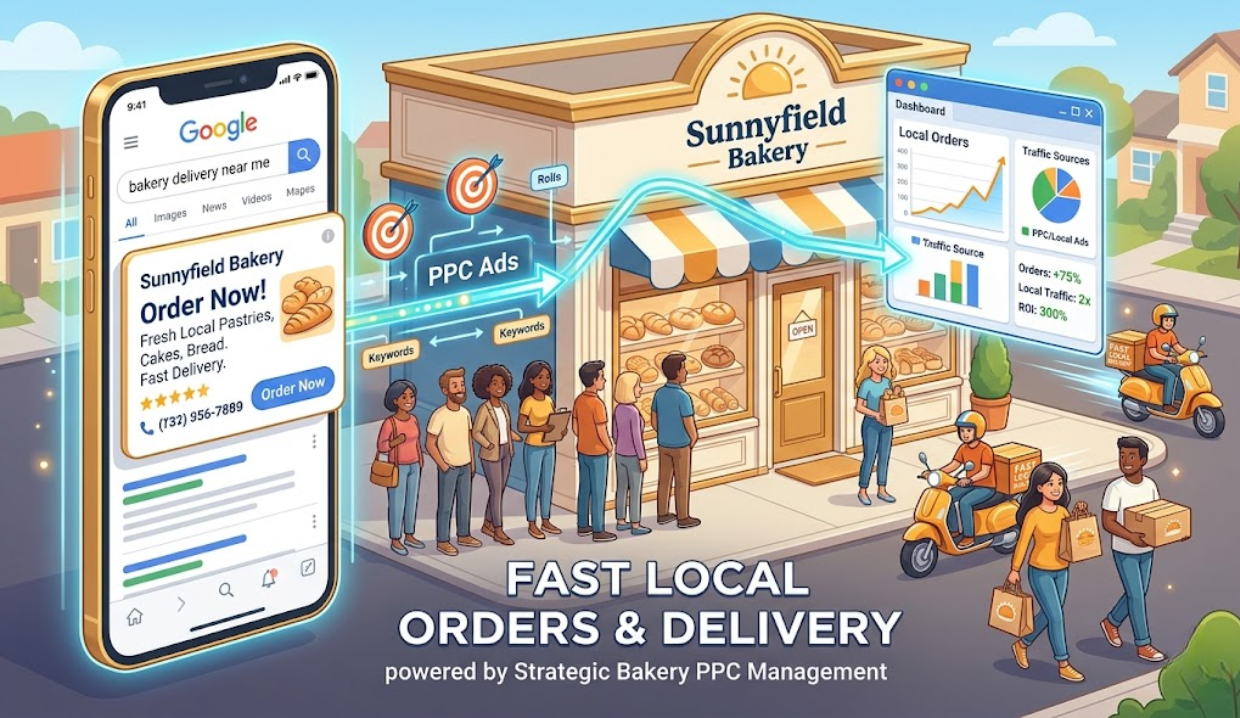
Running a bakery today is not just about making great cakes, pastries, or bread. It is also about being visible at the exact moment someone nearby is searching for what you offer. That is where bakery PPC management becomes essential.
Pay-per-click advertising helps bakeries appear at the top of Google when customers search for terms like “birthday cake near me” or “fresh pastries today.” Instead of waiting for organic traffic, PPC puts your bakery directly in front of ready-to-buy customers.
In simple terms, bakery PPC management is the structured process of planning, optimizing, and scaling paid ad campaigns for bakery businesses using platforms like Google Ads. It focuses on targeting the right keywords, improving ad performance, and turning clicks into real orders.
When done correctly, it helps increase foot traffic, online orders, and brand visibility while keeping customer acquisition costs under control.
Understanding Bakery PPC Campaign Structure
A strong campaign structure is the foundation of successful bakery advertising. Without it, even high budgets can produce weak results.
Product-Based Ad Groups
Instead of grouping everything, bakery campaigns should be divided based on products:
- Cakes (birthday, wedding, custom cakes)
- Pastries (croissants, muffins, donuts)
- Bread (artisan, sourdough, sandwich bread)
- Seasonal items (holiday specials, festival desserts)
This structure improves ad relevance and increases Google Ads quality score.
Keyword Segmentation Strategy
Keyword organization is critical. A bakery PPC campaign should include:
- High-intent keywords: “buy birthday cake online.”
- Local intent keywords: “bakery near me open now.”
- Product-specific keywords: “chocolate fudge cake delivery.”
- Event-based keywords: “wedding cake bakery service.”
This improves targeting accuracy and reduces wasted ad spend.
Negative Keyword Filtering
Negative keywords prevent irrelevant clicks. Examples include:
- free bakery samples,
- cake recipes
- baking jobs
- DIY bread making
Filtering these ensures the budget is spent only on buyers, not browsers.
Google Ads Strategy for Bakery Businesses
A strong Google Ads strategy is built on intent, location, and timing.
Search vs Performance Max Campaigns
- Search campaigns target users actively searching for bakery products.
- Performance Max campaigns distribute ads across YouTube, Display, Maps, and Search.
For bakeries, search campaigns often deliver higher-quality leads, while Performance Max helps with broader visibility.
Geo-Targeting for Local Bakery Ads
Local targeting ensures ads only show within a specific radius of your bakery. This is essential for freshness-based businesses.
Common strategies include:
- 3–10 km radius targeting
- “Near me” keyword optimization
- Location-based bid adjustments
Smart Budget Allocation
A practical bakery PPC budget split:
- 60% search campaigns
- 20% remarketing
- 20% testing new campaigns
This balance ensures consistent traffic while exploring growth opportunities.
Also read: What Activities Are Part of the Six Business Functions Today
High-Converting Bakery Ad Copy Strategy
Ad copy plays a major role in whether users click or ignore your ad.
Emotional Triggers in Bakery Ads
Food advertising is emotional. Strong triggers include:
- Freshness (“Baked fresh daily”)
- Celebration (“Make birthdays special”)
- Urgency (“Limited today’s batch available”)
Offer-Based Messaging
Examples of high-performing ad angles:
- “Order cake in 30 minutes.”
- “Same-day delivery available”
- “20% off first online order”
Strong Call-to-Actions
Effective CTAs include:
- Order Now
- Get Fresh Cakes Today
- Call to Reserve
- Custom Cake Booking Available
Landing Page Optimization for Bakery PPC
Even the best ads fail if landing pages do not convert.
Menu-Based Landing Pages
Instead of a homepage, use dedicated pages for:
- Cakes
- Pastries
- Custom orders
This increases relevance and improves conversion rates.
Mobile-First Experience
Most bakery searches happen on mobile. A strong landing page must include:
- Fast loading speed
- Click-to-call buttons
- Simple ordering process
- Clear product images
Trust Signals
Build credibility using:
- Customer reviews
- Ratings
- Real bakery images
- Delivery guarantees
Advanced Bakery PPC Growth Strategies
Once the basics are working, advanced techniques help scale results.
Remarketing for Repeat Customers
Many users visit but do not buy immediately. Remarketing helps bring them back using:
- Display ads
- YouTube ads
- Discount reminders
Seasonal Campaign Automation
Bakery demand increases during:
- Weddings
- Holidays
- Birthdays
- Festivals
Automated campaigns ensure ads activate during peak demand periods.
Hyperlocal Radius Bidding
Instead of broad targeting, focus on:
- High-income neighborhoods
- Office areas (for lunch orders)
- Residential zones (for celebrations)
Tracking and Optimization in Bakery PPC
Without tracking, optimization is impossible.
Conversion Tracking Setup
Track actions like:
- Phone calls
- Online orders
- WhatsApp inquiries
- Form submissions
Cost Per Conversion Analysis
Monitor:
- Customer acquisition cost
- Return on ad spend (ROAS)
- Click-to-order ratio
A/B Testing Framework
Test different:
- Headlines
- Offers
- Landing pages
- Images
Small improvements lead to major revenue growth.
Common Bakery PPC Mistakes to Avoid
Many bakery campaigns fail due to simple errors:
- Targeting too broad keywords
- Ignoring negative keywords
- Sending traffic to the homepage
- Not tracking conversions
- Overlapping ad groups
Fixing these can instantly improve performance.
Bakery PPC Intent Strategy: Understanding Customer Psychology
Search intent is the most important factor in bakery PPC success.
Transactional Intent
Users ready to buy:
- “order cake near me”
- “Birthday cake delivery today.”
Informational Intent
Users researching:
- “best cake flavors”
- “types of wedding cakes”
Local Intent
Users looking for nearby options:
- “Bakery open now near me.”
Mapping these correctly ensures ads match user intent.
Scaling Bakery PPC Campaigns
Once campaigns are stable, scaling becomes the next step.
Expanding Keyword Clusters
Add new variations like:
- “luxury custom cakes”
- “eggless bakery options”
- “vegan bakery near me”
Multi-Location Strategy
If expanding:
- Create separate campaigns per city
- Use localized landing pages
- Adjust bids per region
Automation and AI Optimization
Modern tools help automate:
- Bid adjustments
- Keyword suggestions
- Audience targeting
- Performance tracking
What Makes Bakery PPC Different from Other Industries
Bakery PPC is unique because it is:
- Highly time-sensitive
- Emotion-driven
- Location-dependent
- Product-specific
Unlike general e-commerce, bakery ads depend heavily on freshness, urgency, and local presence.
Key Takeaways
- Structure campaigns by product type, not randomly
- Focus on high-intent and local keywords
- Use emotional, urgency-driven ad copy
- Optimize landing pages for mobile users
- Track conversions accurately
- Continuously test and refine campaigns
- Leverage seasonal demand for scaling
FAQS: Bakery ppc management
What is bakery PPC management?
It is the process of running and optimizing paid advertising campaigns for bakeries using platforms like Google Ads to attract local customers and increase orders.
How does PPC help a bakery grow?
It increases visibility in search results, drives local traffic, and brings customers who are actively looking to buy bakery products.
Is Google Ads effective for small bakeries?
Yes, especially when targeting local searches and high-intent keywords like “cake delivery near me.”
How much should a bakery spend on PPC?
It depends on location and competition, but small bakeries often start with a modest daily budget and scale based on ROI.
What is the best strategy for bakery ads?
A combination of local targeting, product-based campaigns, strong ad copy, and optimized landing pages delivers the best results.
Conclusion
Bakery PPC management is not just about running ads. It is about understanding customer intent, structuring campaigns intelligently, and continuously optimizing performance.
When executed properly, it transforms a bakery from a local shop into a high-demand brand that consistently attracts online orders and walk-in customers.
The key is simple: reach the right customer, at the right moment, with the right message.