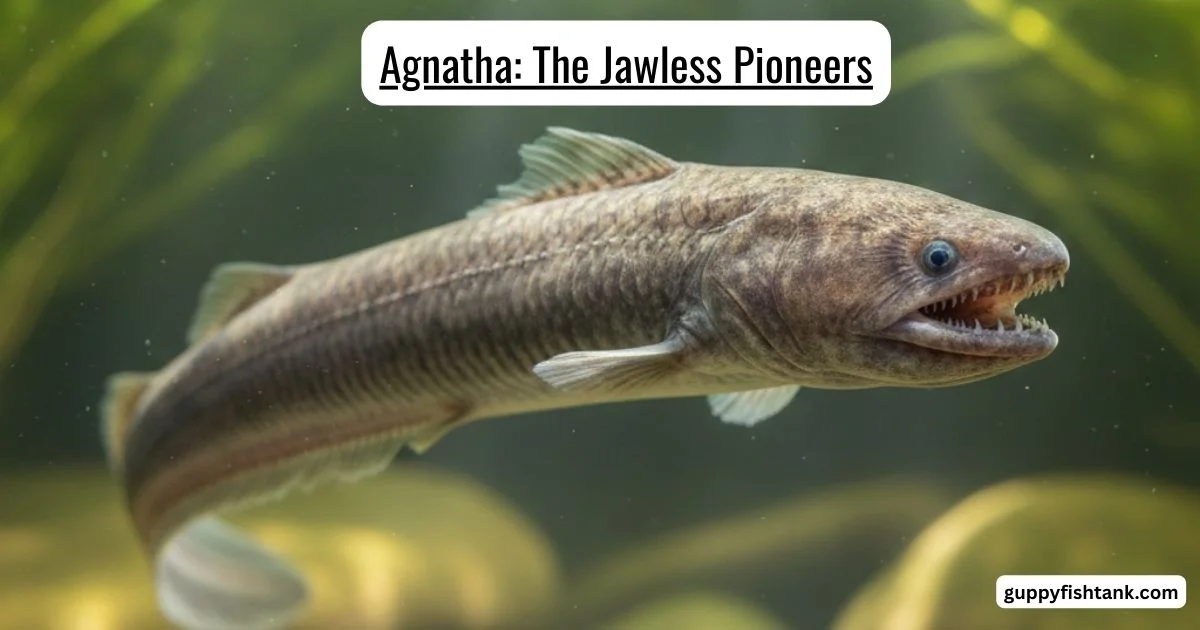
Hey, you! Ever wondered about the weird, ancient fish that kick started life as we know it? Picture this: slippery, jawless swimmers from 500 million years ago, still hanging around today. Welcome to the world of Agnatha, the jawless fish that proves nature loves a good comeback story. These primitive jawless vertebrates aren’t your typical goldfish; they’re the tough originals in the chordata family, and they’re about to blow your mind. Let’s dive in together, step by splashy step.
Evolutionary History of Jawless Fishes
Imagine Earth as a giant ocean playground, way back when dinosaurs were just a dream. That’s where Agnatha, jawless vertebrates, first showed up, around 500 million years ago. These early jawless fish, called ostracoderms and conodonts, were the granddaddies of all vertebrates, no jaws, no paired fins, just pure survival grit.
Back then, oceans teemed with these armored swimmers, scraping food off rocks with their suction mouths. They paved the way for jawed fish, or gnathostomes, but many agnathans faded out in massive extinctions. Heartbreaking, right? Yet, a handful survived, like hidden treasures in the deep sea. Today, only lampreys and hagfish carry the torch as modern cyclostomes. It’s like nature’s way of saying, “Old school rules!”
Key Characteristics: No Jaws, All Adaptations
What makes Agnatha fish so special? Simple: they ditched jaws for smarter tricks. No bony scales or paired fins, just a soft, bendy cartilage skeleton and a notochord, that tough spine rod running down their back. Picture a noodle with attitude.
They rock 7 to 14 gill pouches for breathing, perfect for zipping through water. Their skin? Super smooth or slimy, no scales to weigh them down. And that mouth? A round sucker for grabbing snacks. Lampreys rasp with tiny teeth, while hagfish ooze slime that turns water into instant goo. Talk about a gross out defense! These petromyzoniformes and myxiniformes adaptations scream clever over complicated. Are you hooked yet?
Lampreys vs. Hagfish: Core Cyclostomes Compared
Time for a showdown: lampreys versus hagfish, the dynamic duo of jawless vertebrates. Lampreys look like eels with a face full of horror 7 gill slits, a rasping tongue, and a knack for latching onto salmon or lake trout. These freshwater parasites suck blood for months, leaving fish gasping. Ouch!
Hagfish? Deep sea cleanup crew. They burrow into dead whales, tying knots in their bodies to rip off chunks. Their slime glands produce yards of goo in seconds, clogging gills and scaring predators. Both lack true stomachs or stomachs in which food goes straight through. Lampreys migrate to spawn and die; hagfish, on the other hand, continue to scavenge. Which one’s cooler? You decide these cyclostomes make jaws look overrated!
Wondering where these jawless survivors call home? Their habitats are as unique as their adaptations.
Ever ask yourself, “Where do these jawless fish hang out?” Great question, explorer! Lampreys split their time between freshwater rivers for breeding and oceans or lakes as adults. They’re pros at invading spots like the Great Lakes, hitching rides on ships, and wiping out trout populations, villains or survivors?
Hagfish love cold, deep ocean floors, from 100 to 5,000 feet down, scavenging in the dark. No sunlight, no problem, their smell sensing skills shine. Both dodge bright lights and warm waters, sticking to chilly hideouts. Imagine the eerie silence down there; it gives you chills thinking about their secret worlds!
Feeding Mechanisms and Defenses
Hungry for how Agnatha eats? No chomping jaws means suction power rules. Lampreys drill in with 100+ tiny teeth, pumping anticoagulant fluids to keep blood flowing, nature’s vampire kit. They feed on fish blood and flesh, sometimes for a year straight.
Hagfish tie themselves in knots to tear meat and produce slime that expands 10,000 times in water, trapping enemies in a mucus nightmare. This anticoagulant fluid, lamprey trick, and hagfish slime glands combo? Pure genius defenses passed down from extinct agnathans. It’s equal parts scary and awe inspiring, that tingle of wonder?
Curious about their status today? It’s a tale of survival and threat, old species in a changing world.
Here’s a shocker: Are agnathans endangered or invasive today? Lampreys are both! Sea lampreys exploded in the Great Lakes after canals opened, slashing fish stocks by 90%. Governments zap them with harsh chemicals, but necessary to save ecosystems.
Hagfish? Overfishing for leather like skin in boots and wallets is pushing some species toward trouble. Yet, they’re tough cookies, rebounding fast. Conservation efforts combat invasive lampreys while protecting hagfish from fishing nets. It’s a rollercoaster route for these jawless survivors!
Fossil Records: 500 Million Years of Jawless Legacy
Flashback to fossils: Agnatha, jawless fish, boast a 500 million year legacy. Earliest finds? Ostracoderms from the Ordovician, bony plates shielding heads like ancient knights. Pteraspis and Cephalaspis swam 450 million years ago, first with real backbones.
Conodonts, tiny jawless fish with fang like teeth, ruled the seas until 200 million years ago. Most vanished in the Devonian extinction, but fossils tell tales of their rise before gnathostomes stole the show. Digging these relics feels like time travel pure magic!
Agnatha in Human Culture and Research
Agnatha pop up in myths as sea serpents, and lampreys inspired Viking tales of bloodsuckers. Today? Hagfish skin crafts pricey purses; lamprey research fights cancer with their immune tricks. Scientists study their primitive complement system for human meds.
Fisheries battle lamprey invasions costing billions. In labs, the agnatha anticoagulant fluids of lamprey yields inspire blood thinners. From folklore villains to biotech heroes, these jawless vertebrates touch our world deeply. Isn’t it wild how ancient fish shape tomorrow?
Why Agnatha Still Captivates Us
You made it! Agnatha reminds us that life’s weird roots, jawless fish like lampreys and hagfish, with their notochord, gill pouches, and slime defenses, birthed vertebrates. From ostracoderm fossils to modern invaders, they thrill and teach.
Read More: Unlocking 40+ Beautiful Types of Guppy Fish
Conclusion
Wrapping up our jawless adventure, imagine the thrill of these ancient survivors still slithering through today’s oceans, lampreys latching on, hagfish slimming up the deep. You’ve journeyed from 500 million year old fossils to modern invaders, uncovering why Agnatha, jawless fish, with their notochord, gill pouches, and wild defenses, are vertebrate VIPs. They spark wonder, teach resilience, and remind us: evolution’s oddballs often steal the show.