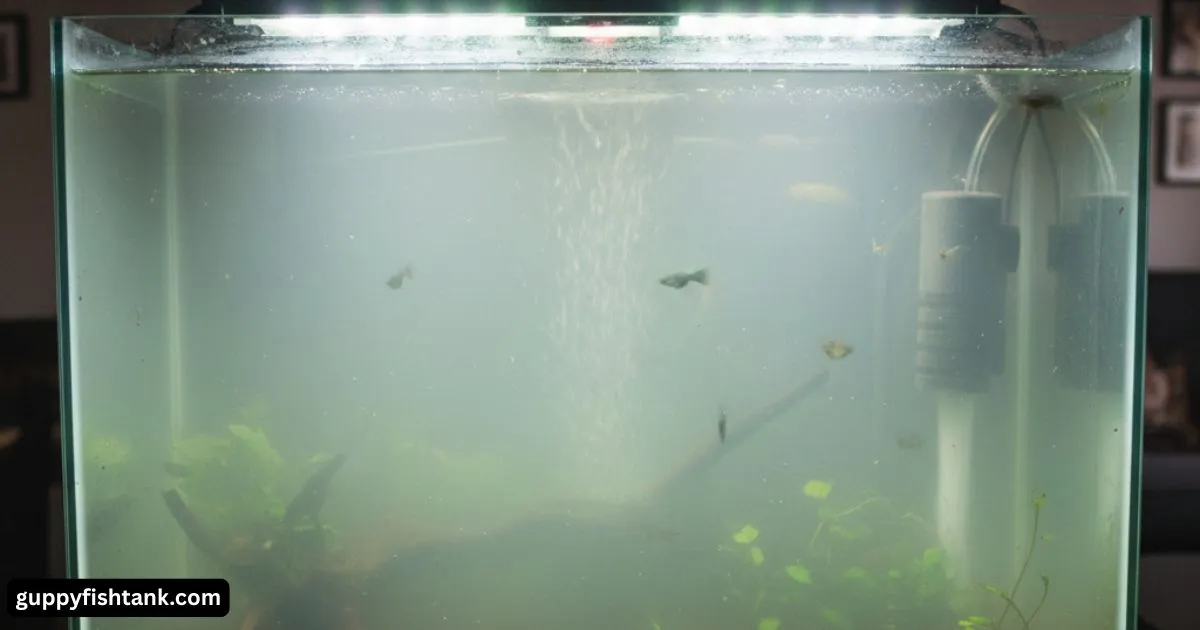
It’s usually a sneaky bacterial bloom—think millions of tiny good guys partying on leftover food bits before your tank’s cleanup crew catches up.
This milky haze isn’t dirt; it’s a bacterial explosion from a bacterial bloom outpacing your filter. Or it could be mechanical water: fine dust from unrinsed gravel swirling like a snow globe. Algae bloom adds green fuzz if lights blaze too long. You’ve got this—spot the villain, and victory’s yours. Heart racing yet? Breathe; clarity’s coming.
Top 5 Causes Ranked by Newbie Error
Newbies trip on these daily, turning cloudy fish tank dreams foggy. Here’s the hit list, ranked by how often they strike:
- Overfeeding (40% of cases): You love your fish, so you sprinkle extra flakes. They eat half, the rest rots, sparking ammonia spikes and bacterial bloom. Feed what vanishes in 2 minutes—watch their joy, not the flakes piling up.
- Substrate dust: Skip rinsing gravel? Powdery clouds erupt from substrate particle decorations. Shake it clean first, or forever stir haze.
- Poor filtration: Weak pumps let waste fester, begging poor filtration woes. Upgrade to a beast that cycles 5x tank volume hourly.
- Algae flares: Too much light (over 8 hours) plus nutrients equals algae growth takeover. Dim it down!
- Silicates sneaking in: Tap water hides minerals fueling silicate brown algae in new tanks. Test and switch to purified stuff.
These causes plague new tank cloudy setups—fix one, and your finned pals throw a party.
Is Cloudy Water Dangerous for Fish?
You spot cloudy new aquarium and worry: Are my fish gasping? Short answer: Sometimes yes, and it tugs the heartstrings.
Cloudy aquarium water blocks oxygen like fog on a car windshield—fish gulp at the surface, stressed and sluggish. Ammonia from decay burns gills; unchecked, it spells doom. Here’s a quick risk rundown:
| Low (Milky White) | Bacterial bloom steals O2 at night | Slow swimming, no panic |
| Medium (Green Tint) | Algae bloom chokes light | Hiding, faded colors |
| High (Brown Murk) | Heterotrophic bacteria oxygen deficiency crash | Gasping, fin nipping |
Test water daily—zero ammonia saves lives. Your fish trust you; don’t let haze steal their sparkle.
Hidden Oxygen Killers in Hazy Tanks
Competitors gloss over this killer: Nighttime bacterial die-offs in a cloudy tank after a water change. Those bloom buddies gobble oxygen like kids at a candy buffet, starving fish while you sleep.
Sudden water changes without seeding gravel? You flush good bacteria, inviting a rebound bacterial bloom. Solution: Scoop gravel from a buddy’s mature tank to jumpstart the cycle. Nitrate test cloudy water kits (under $10) scream warnings early. Imagine your fish thriving, not twitching— that’s the win. No more hidden heartbreak.
24-Hour Fix Protocol
Panic mode? Follow this solution’s battle plan to fix the cloudy water in the new fish tank. You’ll see results by bedtime.
- Water change blitz: Siphon 25-50% gently—no shock. Add dechlorinator; repeat tomorrow.
- Boost filtration: Crank it up. Add flocculants (clumping powder) or microfiber pads to trap mechanical, cloudy particles on the substrate.
- UV sterilizer shot: Zaps bacteria mid-swim—crystal water in hours.
- Feed lockdown: Skip food for 24 hours. Resume tiny bits.
- Seed the fix: Sprinkle established gravel for biofilter seeding gravel.
Pro tip: Vacuum gravel weekly to nix dead fish decomposition haze. Your tank rebounds like a champ—fish dart happily. Hero status unlocked!
When to Skip Chemicals
Chemical clarifiers tempt, but skip for fish-safe clarifiers that last. Live plants like Java moss gobble nutrients, starving cloudy tank bacteria die off.
DIY baking soda tweaks balance pH without harm—1 tsp per 20 gallons, test first. Why risk fish fries when nature’s got backup? Plant a jungle; watch haze vanish. Feels good, right? Pure, chemical-free victory.
Prevention Checklist for Crystal Clear
Lock in forever-clear with this no-fail routine. Say goodbye to cloudy water fish tank drama:
- Lighting: 6-8 hours max, timer on.
- Feeding: 2-minute rule, 1x daily.
- Stock light: 1 inch fish per gallon—should I add more fish to cloudy water? Nope, wait 7 days.
- Test weekly: Ammonia zero, nitrates under 20.
- Clean rhythm: Gravel vacuum schedule + filter rinse monthly.
- Plants power: Live plants as nutrient sponges.
- Cycle smart: Aquarium cycling timeline—7-14 days before fish.
Green pea soup algae? Cut light, add fish-safe clarifiers naturally. Your tank becomes a self-cleaning dream—fish flourish, you grin ear-to-ear.
Read More: Planted Tank Aquarium Lights: Expert Tips for Healthy Plant Growth”
FAQs
Why is my aquarium water cloudy after setup?
New tanks often get milky from bacterial bloom as good bacteria fight waste—give it 3-7 days with daily water changes.
Is cloudy aquarium water harmful to fish?
Yes, it can drop oxygen levels and spike ammonia, making fish gasp or hide—test the water and act fast!
How do I fix cloudy fish tank water quickly?
Siphon 25-50% water, add flocculants, boost filtration, and skip feeding for 24 hours—clarity returns fast.
Can overfeeding cause cloudy aquarium water?
Totally! Uneaten food rots, fueling bacteria—feed only what fish eat in 2 minutes to prevent it.
How long does new tank cloudiness last?
Usually 3-7 days if you maintain the cycle; seed with mature gravel to speed it up.
Conclusion
There you have it—your complete battle plan against cloudy aquarium water, from spotting sneaky bacterial bloom culprits to nailing those life-saving water changes. You’ve got the know-how to turn panic into pride, keeping your fish flipping happily in crystal-clear bliss.
Grab that siphon, test kit, and a dash of patience—your tank’s transformation starts today. Which fix will you tackle first? Drop a comment below, and here’s to haze-free adventures ahead!